What are “FLOW ARTS” you ask?? Lets dive deep!

Flow Arts in a nut shell

Flow arts are basically movement, music, and play all rolled into one.

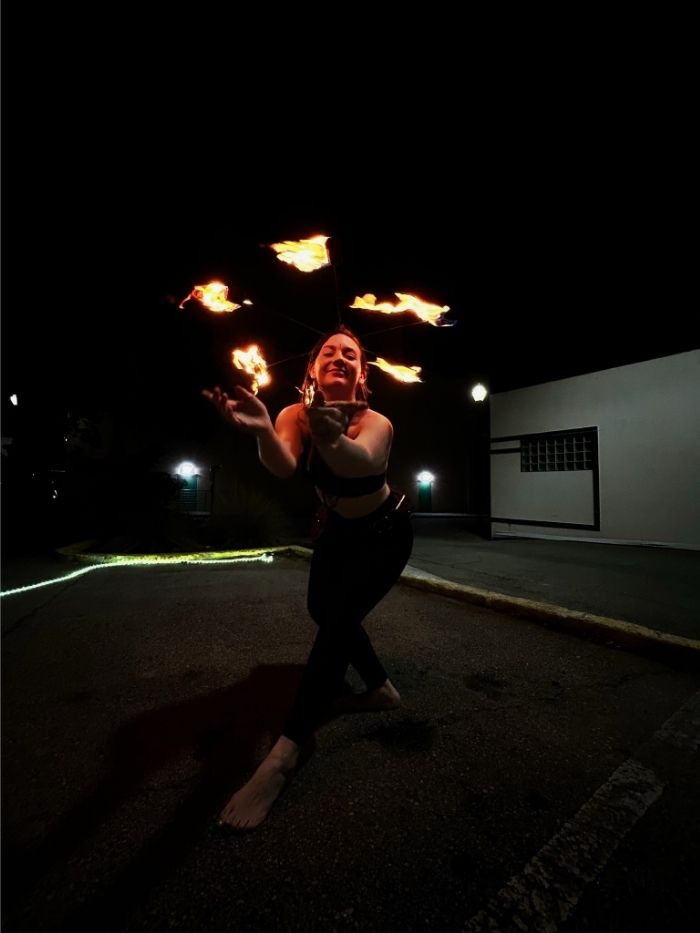
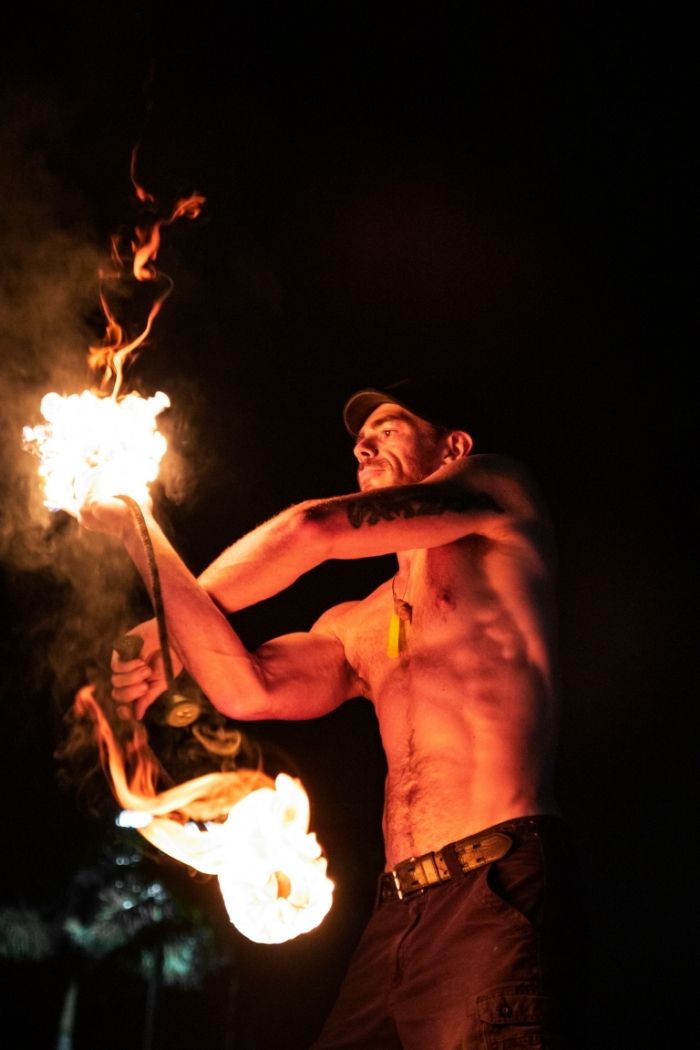
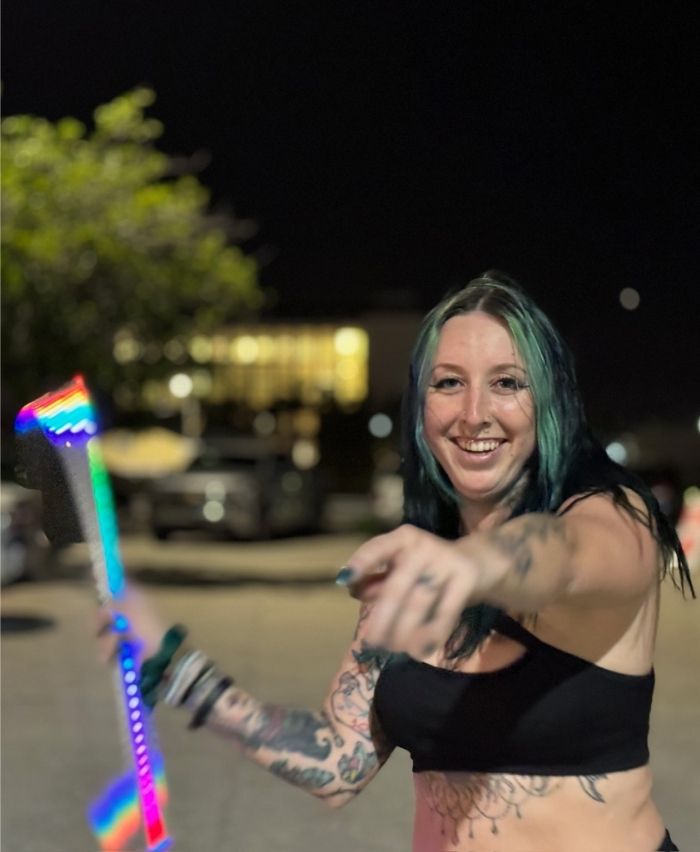
It’s an umbrella term for practices like poi, hooping, staff, juggling, fans, rope dart, and LED/fire props—anything where you’re moving your body in rhythm with an object. Think dance meets circus, with a little bit of martial arts and meditation sprinkled in.

You don’t have to be “a dancer” or “coordinated” to start. Flow arts are super beginner-friendly: you learn simple patterns, your body slowly understands the rhythm, and then one day it just clicks… that’s your flow state.

Why people fall in love with flow arts

  • Stress relief & mental reset
    Repeating patterns and focusing on movement pulls you out of your head and into the moment. It’s like a moving meditation you don’t have to sit still for.

  • Better coordination & body awareness
    As you spin, juggle, or hoop, you naturally build balance, timing, reaction speed, and control over your body.

  • Confidence & self-expression
    Nailing a new trick feels amazing. Over time, you’re not just “learning moves,” you’re developing your own style—and that carries over into the rest of your life.

  • Community & connection
    Flow arts are meant to be shared. People hype each other up, trade tips, and celebrate wins together. It turns a group of strangers into a little micro-community.

  • Healthy, sober fun
    You don’t need substances to feel lit up. Flow gives you a natural high from movement, creativity, and those “whoa, I actually did that” moments.

On this page, you can think of “flow arts” as everything we do that gets people moving, playing, learning, and lighting up together—with props in their hands and support at their back.

Flow arts aren’t just “cool tricks with props.”
They’re a full mind–body–spirit practice disguised as play.

When someone picks up a hoop, poi, staff, or juggling balls and starts to flow, a lot is happening under the surface:

Mind: Stress Relief, Focus, and Mental Health

  • Stress relief: The rhythm, repetition, and music give your brain something calming to lock onto. Worries quiet down because your attention is busy tracking movement instead of spiraling.

  • Focus & presence: Flow arts invite you into the moment. You’re noticing timing, direction, and rhythm instead of notifications and to-do lists.

  • Emotional regulation: Moving with props helps release tension, anxiety, and pent-up energy in a healthy, structured way.

  • Mindfulness without sitting still: It’s meditation for people who fidget—breath, movement, and awareness all happening at once.

Body: Cardio, Strength, and Mobility

  • Cardio without the treadmill: Spinning, stepping, turning, and dancing with props gets your heart rate up in a way that feels like play, not a workout.

  • Strength & endurance: Arms, shoulders, core, and legs all get involved. Over time, you build real strength and stamina just by practicing.

  • Mobility & flexibility: Many flow patterns open the hips, spine, and shoulders, helping you move more freely and comfortably in everyday life.

  • Balance & stability: Tracking spinning props as you pivot, turn, and step trains your balance and spatial awareness.

Brain: Coordination, Cognitive Boost, and Learning

  • Hand–eye coordination: Tossing, catching, and redirecting props constantly challenges your timing and reaction speed.

  • Cognitive flexibility: Learning new tricks is like solving small moving puzzles. You’re exploring patterns, problem-solving, and adjusting in real time.

  • Memory & sequencing: Combinations, transitions, and choreography ask your brain to remember and chain moves together.

  • Learning mindset: Flow arts normalize “fail, adjust, try again.” Dropping the prop becomes part of the process, which builds patience and resilience.

Spirit: Expression, Identity, and Flow State

  • Self-expression: Your flow becomes your signature—your music, your style, your energy. You’re not just copying moves; you’re telling your own story with motion and light.

  • Flow state: That feeling where time disappears and everything feels smooth and synced? Flow arts are designed to take you there.

  • Inner connection: For many people, flowing with fire or LEDs feels like a ritual—grounding, cathartic, and deeply personal.

  • Joy & playfulness: Adults don’t get many chances to just play. Flow arts bring that childlike curiosity back in a way that still feels powerful and meaningful.

Community & Team Building

  • Icebreaker built in: Props in hand give people something to talk about and something to share. Instead of small talk, you get “Whoa, show me that again!”

  • Supportive culture: Flow communities tend to celebrate effort, not perfection. People cheer for each other’s wins and laugh off the drops together.

  • Team building: In group settings, guests are learning side-by-side, trading tips, and helping each other get that next move. It’s a natural team-building tool for venues, retreats, and organizations.

  • Belonging: All ages, backgrounds, and skill levels can stand in the same circle and be part of the experience.

Empowerment & Confidence

  • From “I can’t” to “I did”: The moment someone lands a move they swore they’d never get, something shifts in how they see themselves.

  • Body confidence: Instead of focusing on how your body looks, you start appreciating what it can do. That alone is powerful.

  • Owning your space: As you learn to move with more control and style, you naturally take up more space—on the floor and in your life.

  • Carrying it into real life: The mindset of “try, drop, retry, succeed” applies to jobs, projects, relationships, and goals. Flow becomes a practice for how you handle challenges.

Creativity, Play, and Performance

  • Creative exploration: Every prop is an invitation to experiment—new pathways, new combos, new ways of moving. There’s no single “right” way to flow.

  • Choreography & storytelling: As you progress, you can build routines that match certain songs, moods, or themes and turn your movement into a performance.

  • Stage presence: For performers, flow arts help with confidence on stage, crowd awareness, and learning how to hold attention without saying a word.

  • Lifelong play: It’s a hobby you can grow with for years—there’s always a new move, prop, or style to explore.

Nervous System & Sensory Regulation

  • Healthy sensory input: Repetitive motion, spinning patterns, and gentle rhythmic impact can be very soothing for many nervous systems.

  • Grounding: When emotions or energy feel intense, flowing can bring you back into your body and into the present moment.

  • Self-regulation tool: Over time, flow arts can become a go-to practice when you feel stressed, scattered, or overwhelmed.

Lifestyle: Sober Fun and Healthy Coping

  • Drug- and alcohol-free joy: Flow arts create genuine excitement, connection, and “high” moments without substances. That’s huge for sober spaces, youth programs, and anyone seeking healthier outlets.

  • Screen break: It pulls people out of passive scrolling and into something active, embodied, and creative.

  • Positive habit: It’s easy to build flow into a regular practice—5 minutes in your living room, a session outside, or a community jam.

Inclusivity & Accessibility

  • All ages, all levels: Kids, teens, adults, elders—everyone can start somewhere and progress at their own pace.

  • Adaptable to different bodies and abilities: Many props and patterns can be modified to suit different ranges of motion, energy levels, and mobility needs.

  • No “right” look: You don’t need to fit a certain body type or fitness level. Flow arts meet you where you are and grow with you.

Flow arts might look like simple circles and spinning from the outside, but underneath, it’s working on mind, body, spirit, community, and confidence all at once—through movement, self expression, and a whole lot of play.